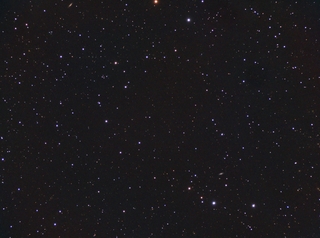
- Constellation: Aquarius
- Right Ascension: 23h 06m 29.368s
- Declination: −05° 02′ 29.04″
- Distance: 40.6 ly
- Estimated Age: 7.6 billion years (estimated)
- Apparent Magnitude: 18.8
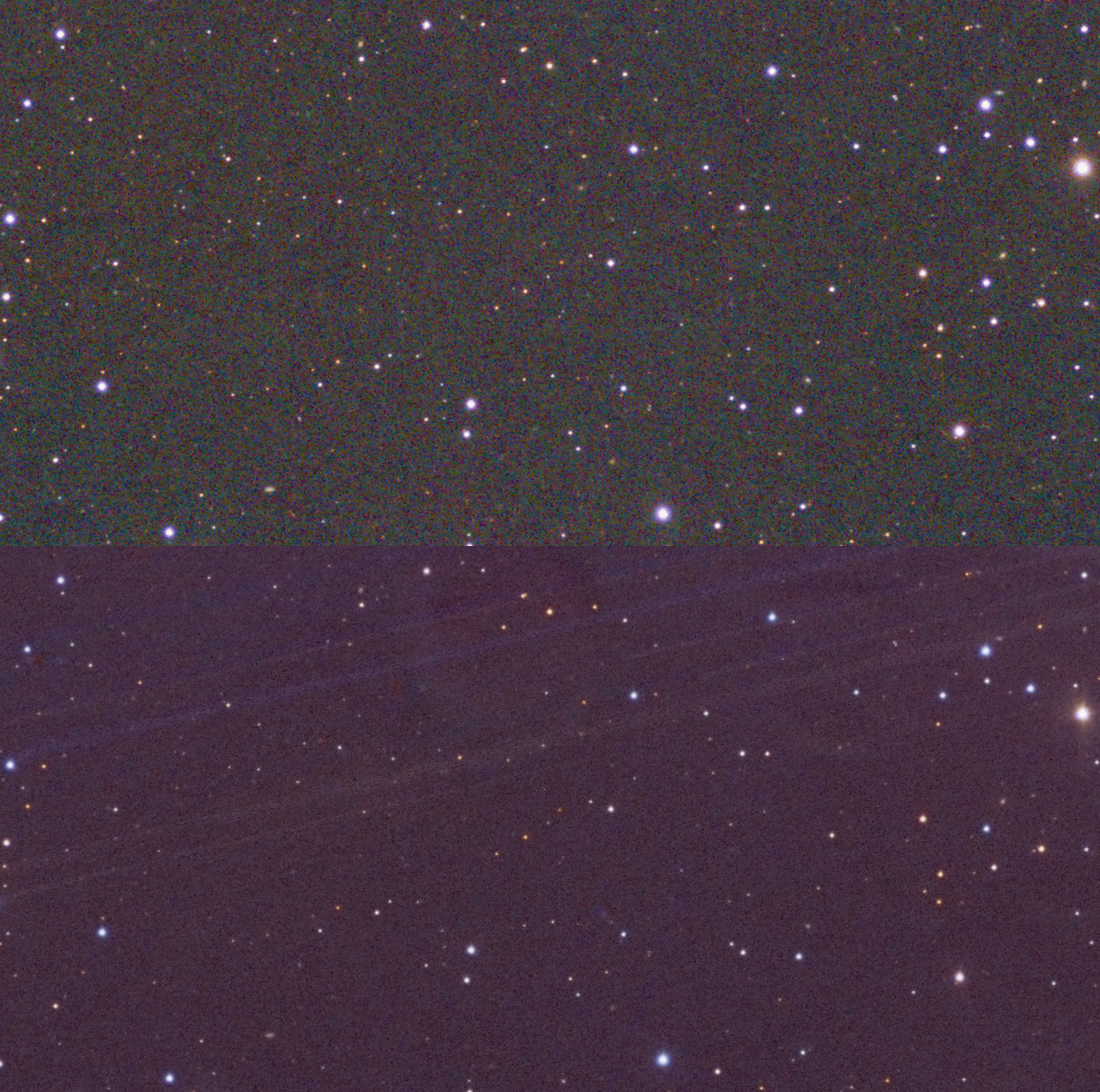
Trappist-1 is a red dwarf star located in Aquarius. One tiny red dot located in a sea of dots, it came to fame in 2016-2017 when it was discovered there were seven planets that orbit the star. At around 40 light years distance, it does display a small proper motion across the sky in this sequence of images from 2020 and 2024.
- Details
- Category: Stars
- Telescope: Explore Scientific 127 Refractor
- Camera: ZWO 2600 MM
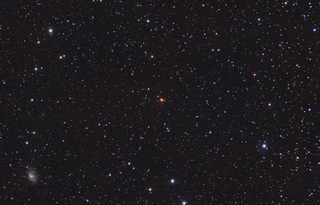
- Constellation: Camelopardalis
- Right Ascension: 05 41 02.49
- Declination: +68 47 55.0
- Apparent Magnitude: 7.7 - 11.6
- B-V Color Index: 2.49
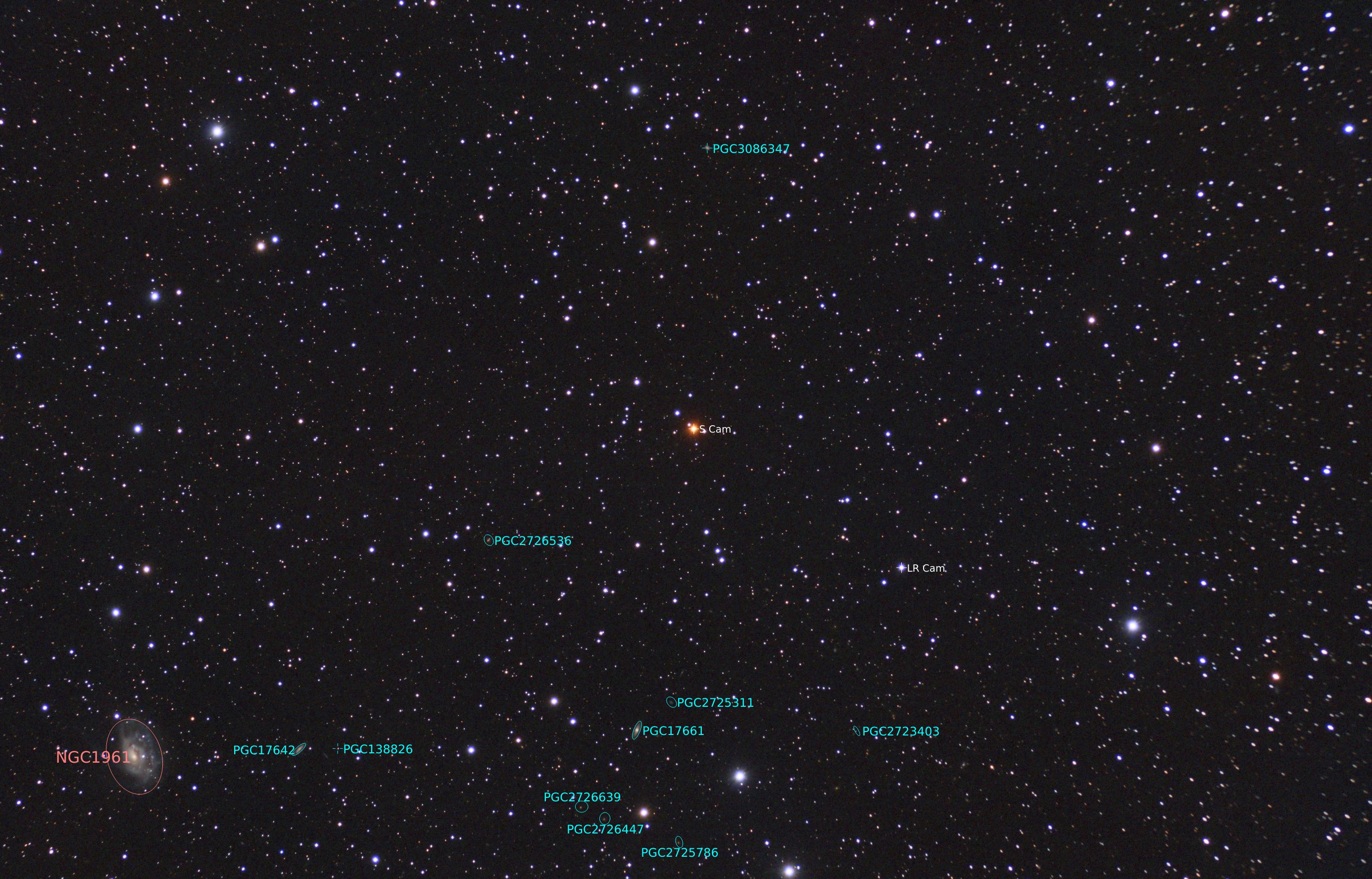
S Cam is a variable carbon star located in Camelopardalis. It's magnitude varies from 7.7 down to 11.6 over a 327 day period. Also visible are background galaxies, and spiral galaxy NGC 1961 at some 200 million light years distant.
- Details
- Category: Stars
- Telescope: Explore Scientific 127 Refractor
- Camera: ZWO 2600 MM
- Constellation: Scorpius
- Right Ascension: 16h 11m 59.740s (Sco A)
- Declination: −19° 27′ 38.33″ (Sco A)
- Distance: 470 ly
- Apparent Magnitude: 4.35 (Sco A)
- B-V Color Index: 0.05 (Sco AB)
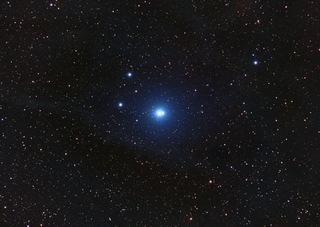
Nu Scorpii is a multiple star system, the two resolved stars in this image each has multiple closer in stars in orbit. As many as 7 stars make up the whole system.
- Details
- Category: Stars
- Telescope: Explore Scientific 127 Refractor
- Camera: ZWO 2600 MM
- Constellation: Auriga
- Right Ascension: 05h 27m 07s
- Declination: +34° 08′ 59″
- Apparent Magnitude: 8.2 - 13.3
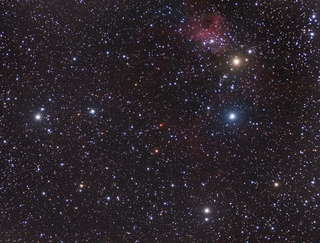
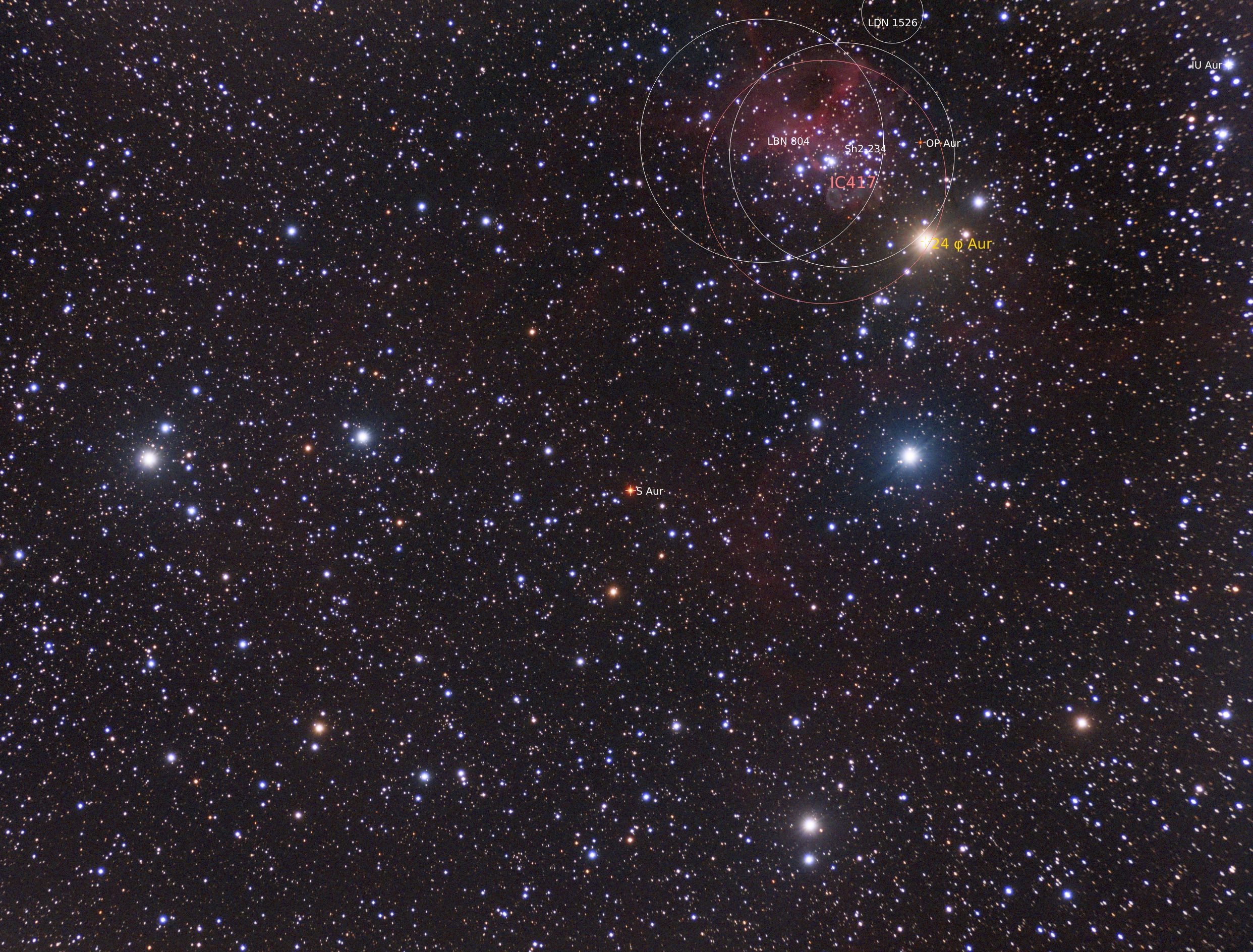
S Aur is a semi-regular variable carbon star located in the constellation of Auriga. It's magnitude varies from 8.2 to 13.3 over an approximate 590 day cycle.
- Details
- Category: Stars
- Telescope: Explore Scientific 127 Refractor
- Camera: ZWO 2600 MM
- Constellation: Ophiuchus
- Right Ascension: 17h 57m 48.49847s
- Declination: +04° 41′ 36.1139″
- Distance: 5.96 ly
- Apparent Magnitude: 9.5
- B-V Color Index: 1.713
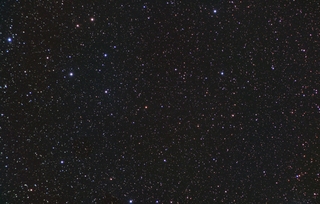
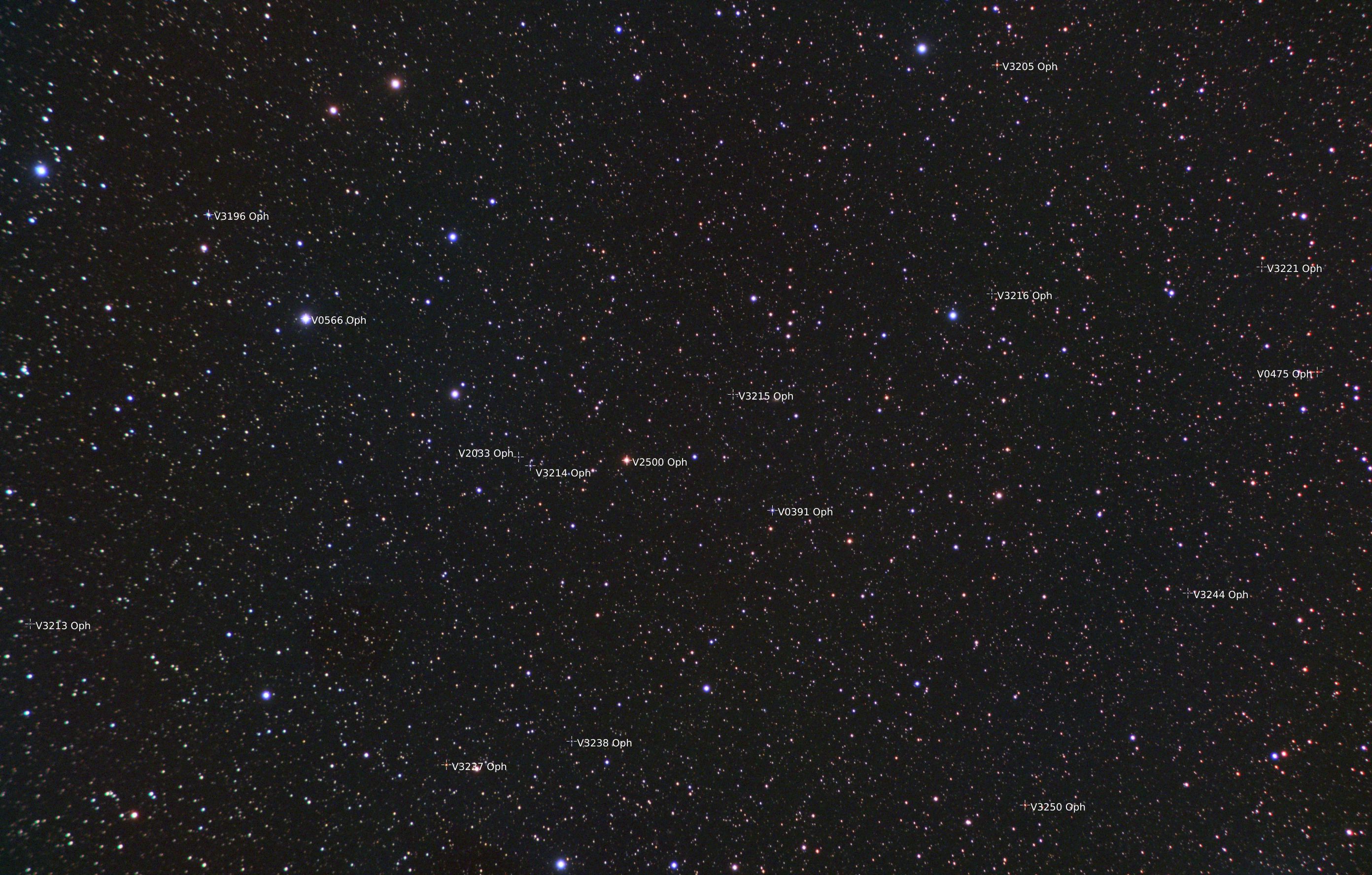
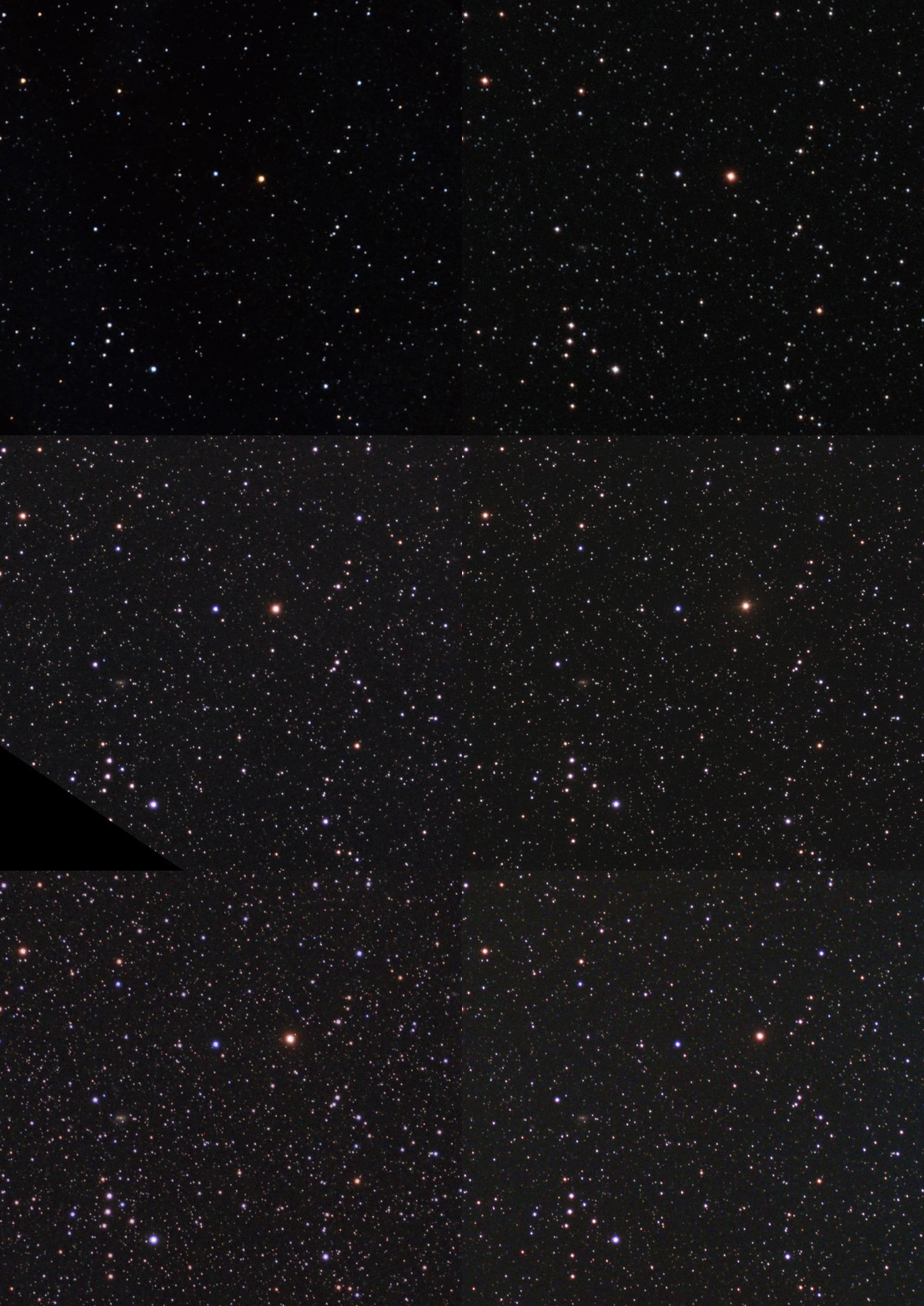
Barnard's Star is the 4th closest star, and shows the highest proper motion (apparent motion) across the sky. With over 10 arc-seconds of motion per year, the change of its position is visible over a year's time. A small red dwarf, and at magnitude 9.5, it requires optical aid to see it. Also is know as V2500 Oph in the variable star catalogue, as is displayed here.
An image of the star taken from 2014 till 2024 at every two years illustrates it's motion over time.
- Details
- Category: Stars
- Telescope: Explore Scientific 127 Refractor
- Camera: ZWO 2600 MM
- Constellation: Leo
- Right Ascension: 10h 56m 28.92087s
- Declination: +07° 00′ 53.0033″
- Distance: 7.8 ly
- Apparent Magnitude: 13.5
- B-V Color Index: +2.034
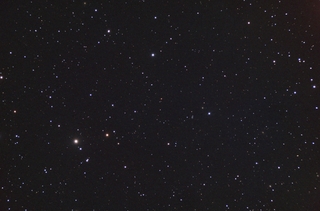
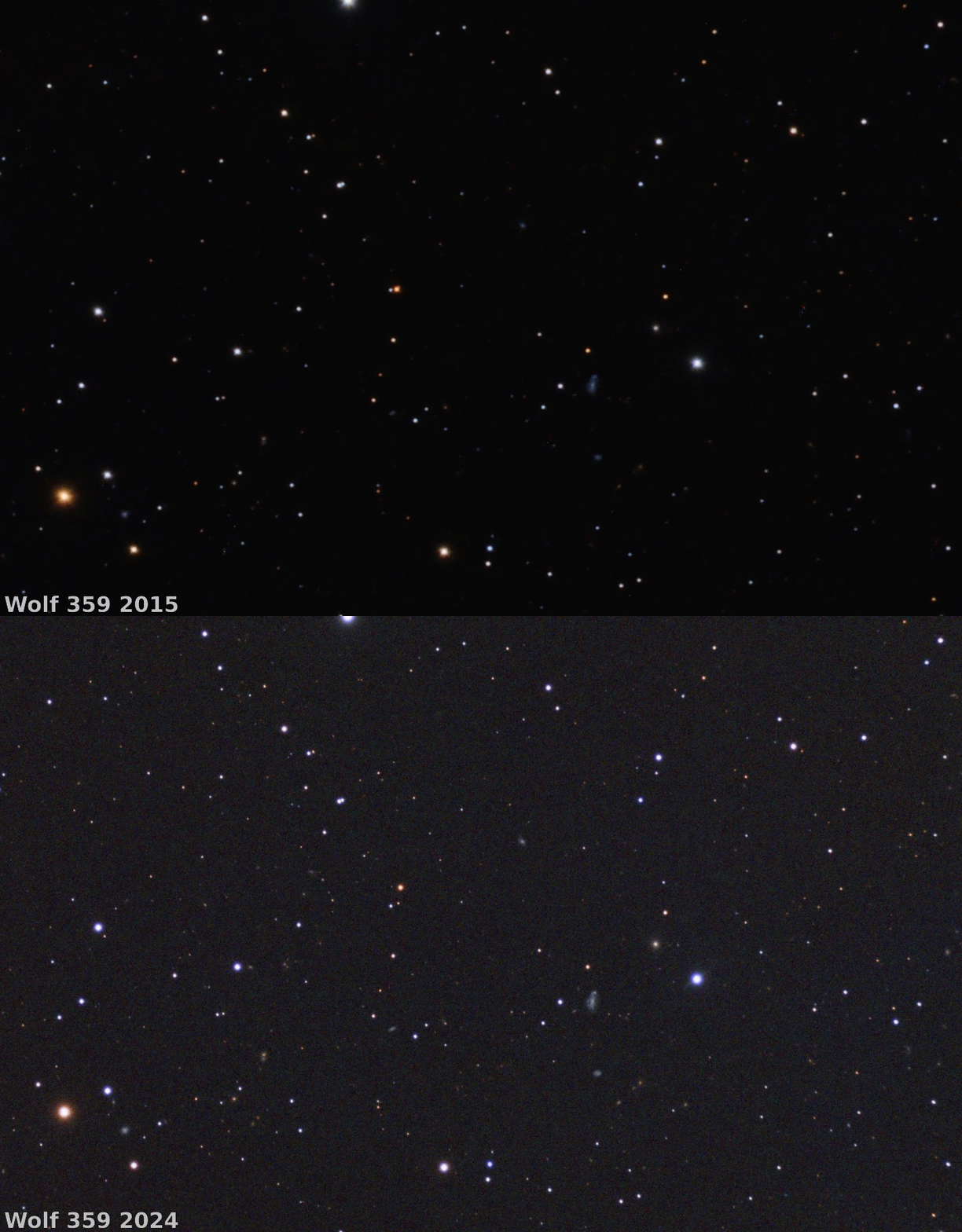
Wolf 359 is a small dim red dwarf star located in the constellation of Leo. One of the stars studied by Max Wolf that exhibited high proper motion across the sky. Images taken in 2015, and 2024 showing its movement against the background stars.
- Details
- Category: Stars
- Telescope: Explore Scientific 127 Refractor
- Camera: ZWO 2600 MM