- Constellation: Corona Borealis
- Right Ascension: 15h 59m 30.1622s
- Declination: 25° 55′ 12.613″
- Distance: 2,630 ly
- Apparent Magnitude: 2 to10
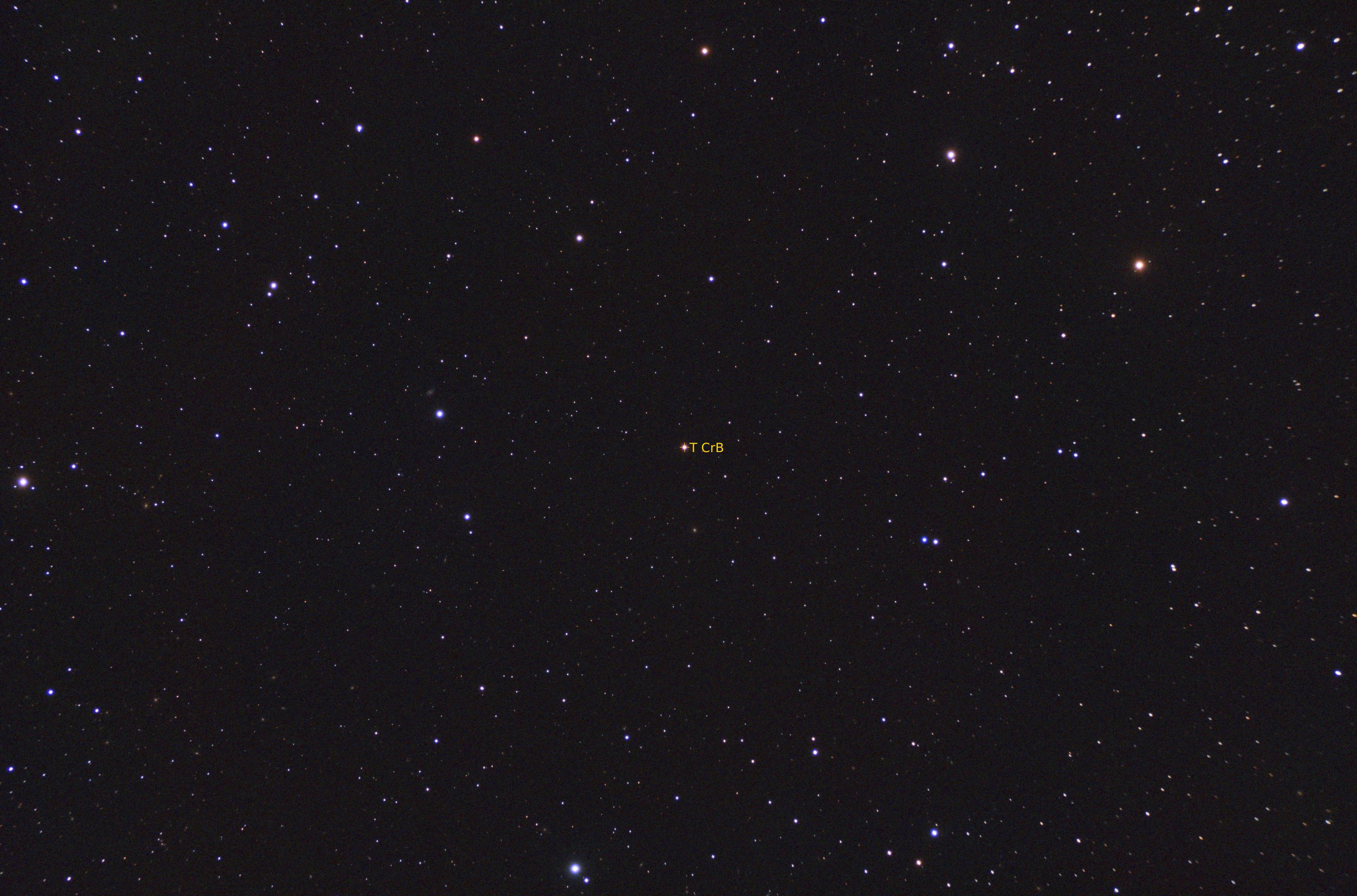
T CrB has been in the news lately, because roughly every 80 years the star goes nova, and its one of the brighter nova stars. But it won't exactly night up the night sky, as it normally goes from magnitude 10, which is way too dim to see without a telescope up to around magnitude 2, which is about the same as Polaris, the north star. The cause of the nova is T CrB is actually a binary star consisting of a red giant, and and a white dwarf star. The white dwarf star is close enough to the red giant to accumulate hydrogen from the red giant star. Once sufficient mass builds up, pressure and temperature is enough to ignite the hydrogen shell, like a giant bomb. The accumulated hydrogen is destroyed, and the process starts all over again.
- Details
- Category: Stars
- Telescope: Explore Scientific 127 Refractor
- Camera: ZWO 2600 MM
- Constellation: Auriga
- Right Ascension: 06 24 02.34
- Declination: +47 42 23.9
- Apparent Magnitude: 8.5 - 13.0 (V)
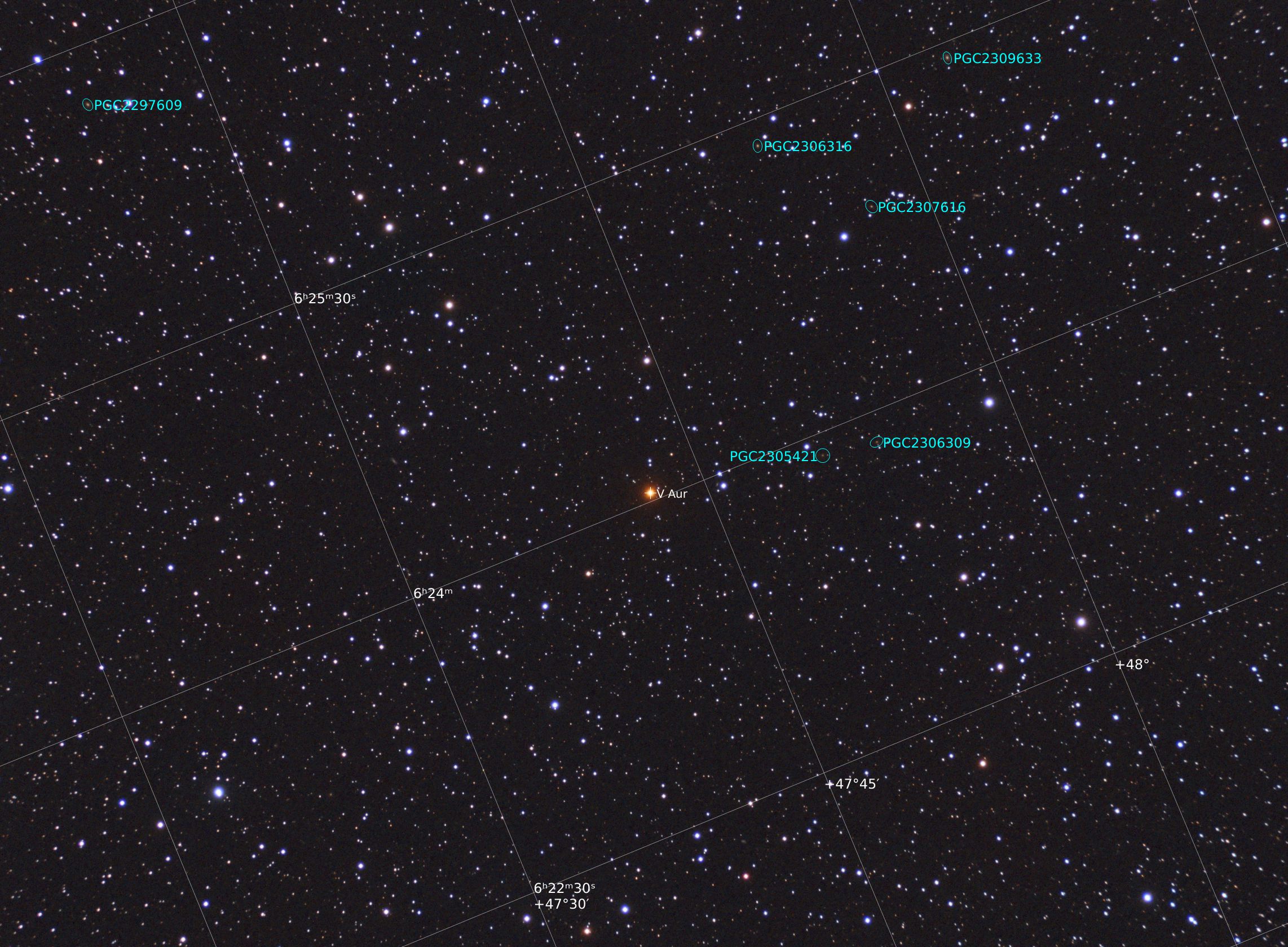
V Aur is a Mira type variable carbon star located in the Constellation of Auriga. It varies in magnitude between 8.5 - 13 (V) in a period of 349 days.
- Details
- Category: Stars
- Telescope: Explore Scientific 127 Refractor
- Camera: ZWO 2600 MM
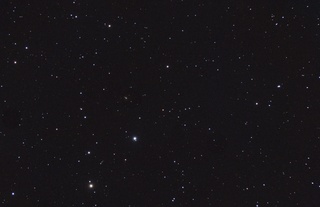
- Constellation: Cetus
- Right Ascension: 01h 39m 01.3773s
- Declination: –17° 57′ 02.587″
- Distance: 8.9 ly
- Apparent Magnitude: 12.8
- B-V Color Index: 1.87
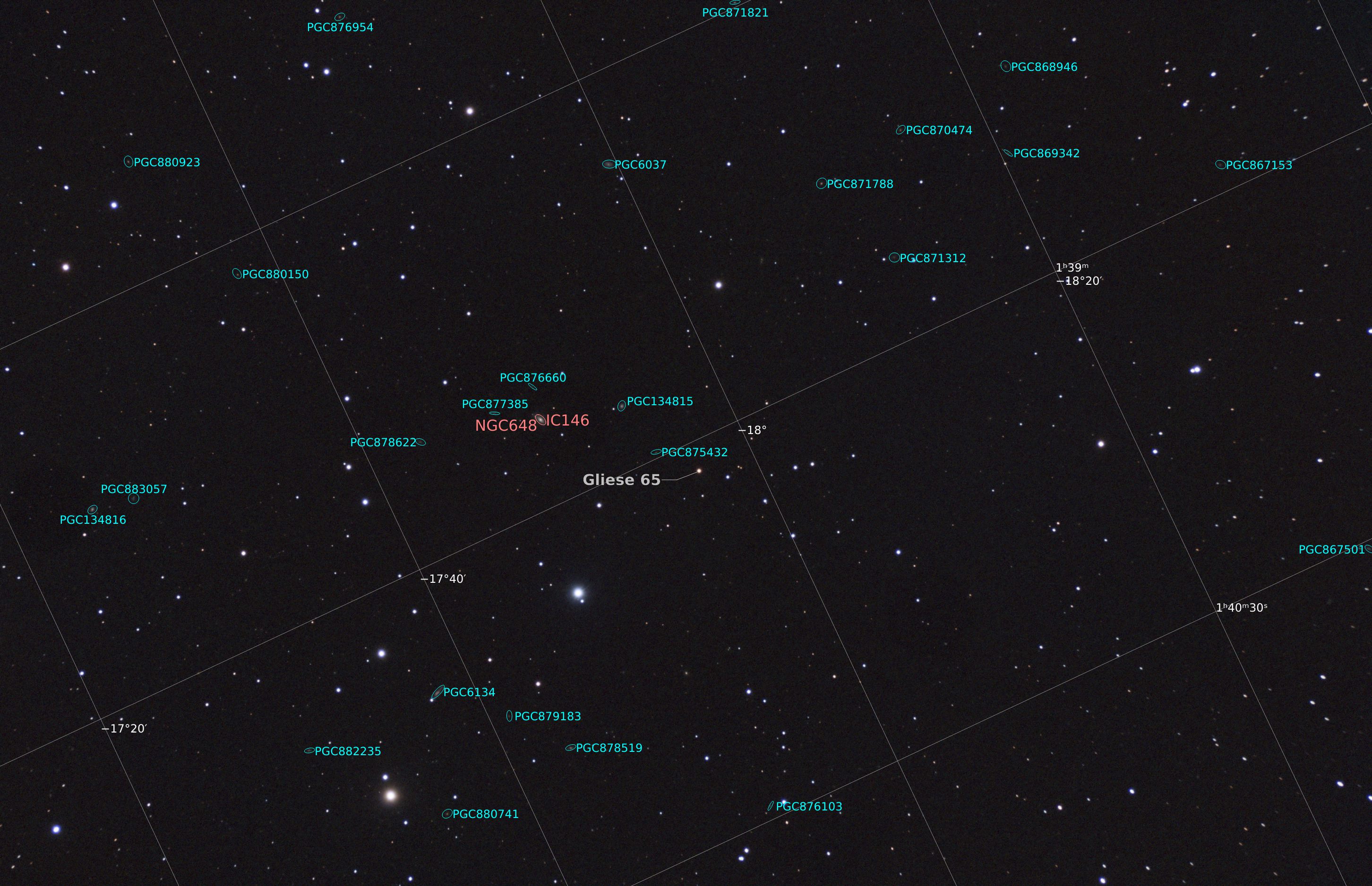
Gliese 65 is a binary star system consisting the the red dwarf flare stars of BL Ceti, and UV Ceti. UV Ceti is considered a standard for flare stars because of its extreme changes in brightness, so now it is used as a classification name for that type of variable star. BL, UV Ceti orbit each other in a 26.5 year cycle. They are located 8.9 light years away in the constellation of Cetus.
- Details
- Category: Stars
- Telescope: Explore Scientific 127 Refractor
- Camera: ZWO 2600 MM
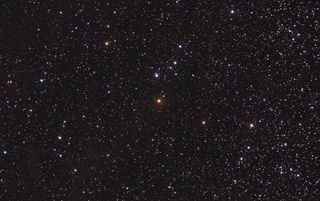
- Constellation: Auriga
- Right Ascension: 05 03 23.04
- Declination: +50 37 58.1
- Apparent Magnitude: 8.9 - 9.6 (V)
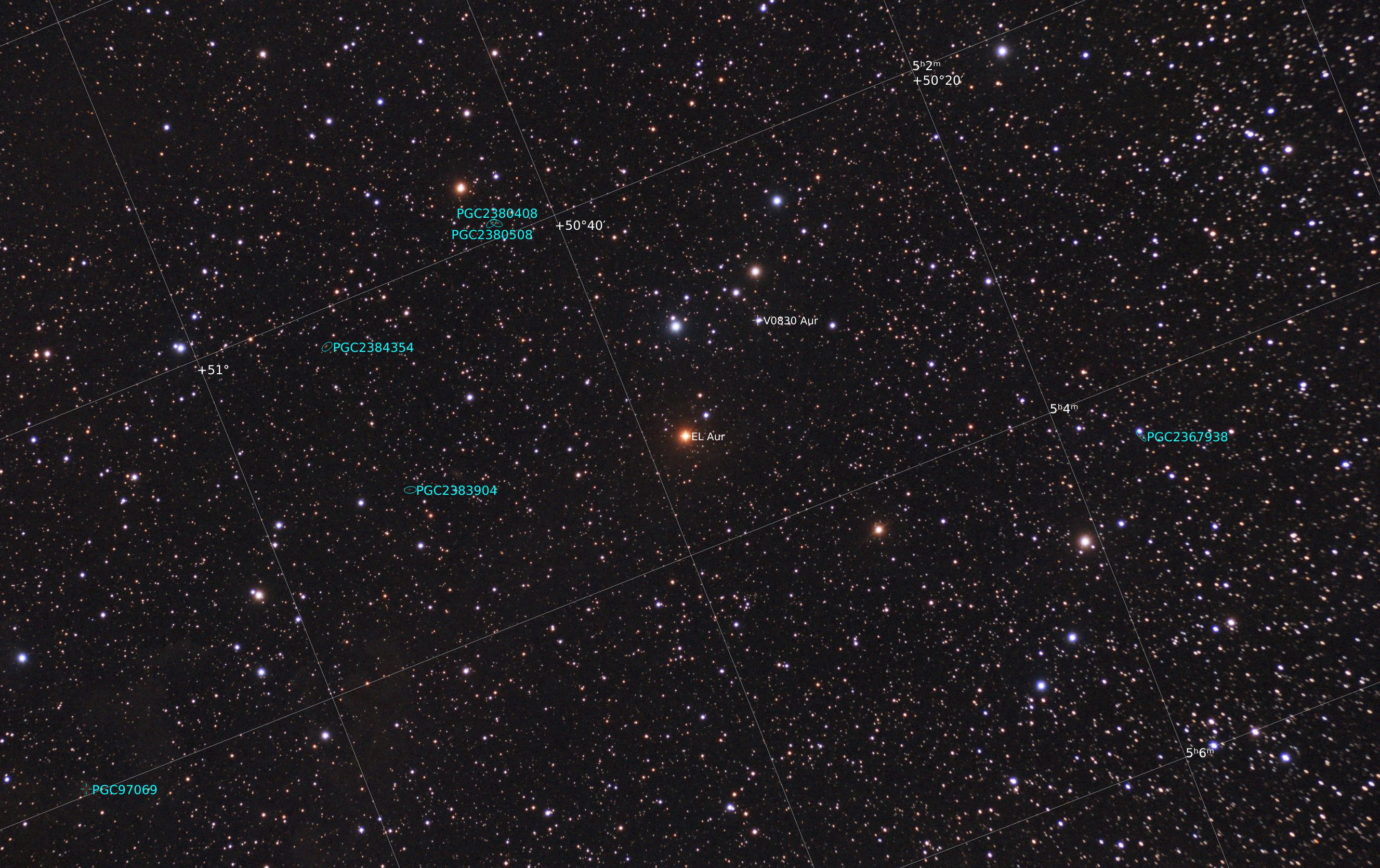
EL Aur is a carbon star located in Auriga. Varies between 8.9 and 9.6 in the "V" band.
- Details
- Category: Stars
- Telescope: Explore Scientific 127 Refractor
- Camera: ZWO 2600 MM
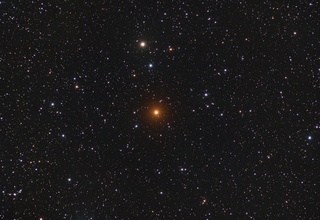
- Constellation: Camelopardalis
- Right Ascension: 04h 051m 13.348s
- Declination: +68° 10′ 07.65″
- Distance: 2,000 ly
- Apparent Magnitude: 6.3 to 8.5 V
- B-V Color Index: +2.1
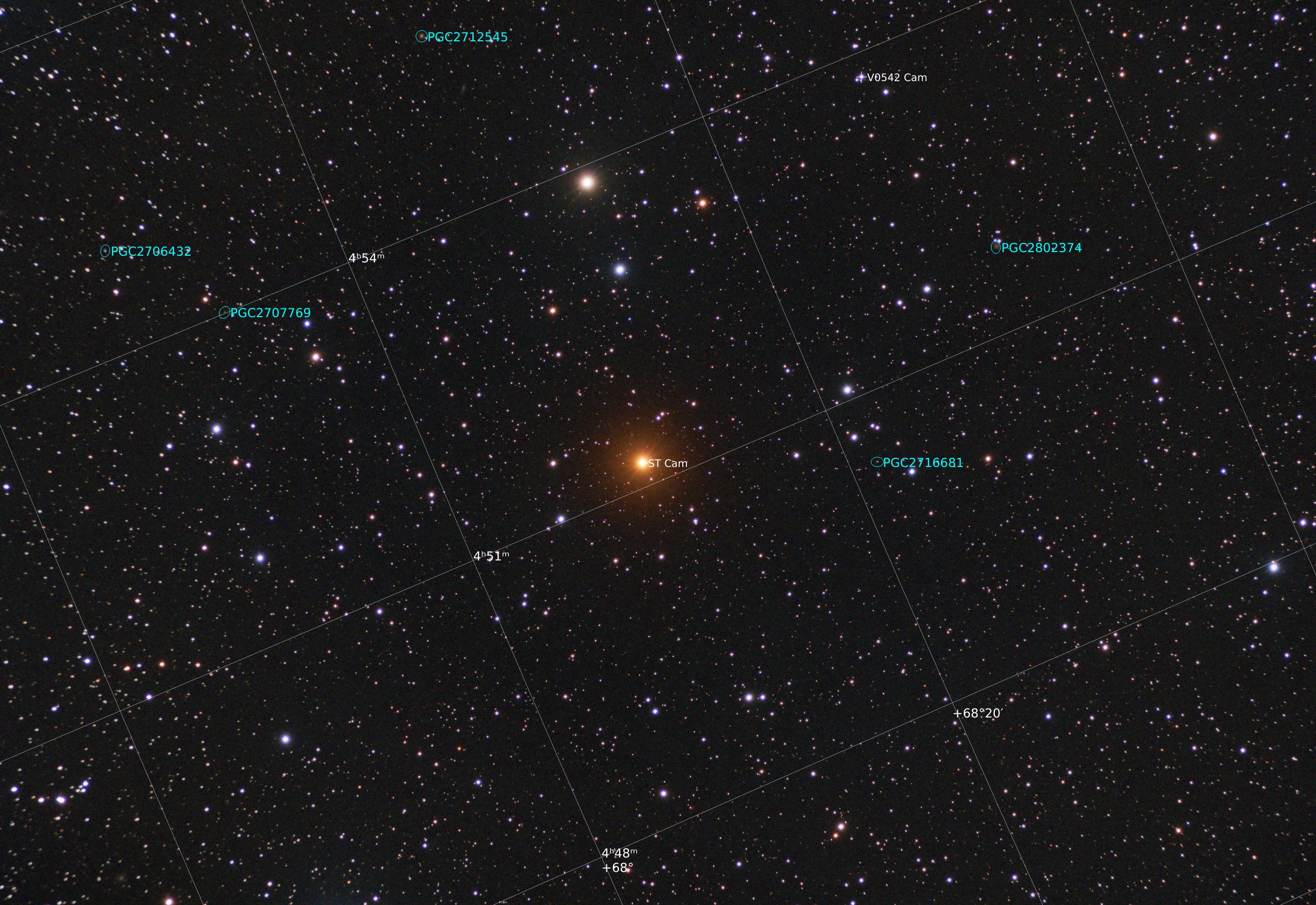
ST Cam is a carbon star located in the constellation of Camelopardalis. It has two periodic pulsation periods of 201 and 368 days for each period.
- Details
- Category: Stars
- Telescope: Explore Scientific 127 Refractor
- Camera: ZWO 2600 MM
- Constellation: Auriga
- Right Ascension: 05 21 48.91
- Declination: +32 30 40.2
- Apparent Magnitude: 7.3 - 11.1
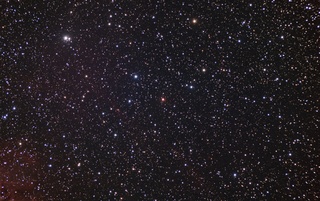
UV Aur is a symbiotic star that is a carbon star with a white dwarf companion star. UV Aur has a period of around 394 days, and varies between 7.3 to 11.1 in magnitude.

- Details
- Category: Stars
- Telescope: Explore Scientific 127 Refractor
- Camera: ZWO 2600 MM